
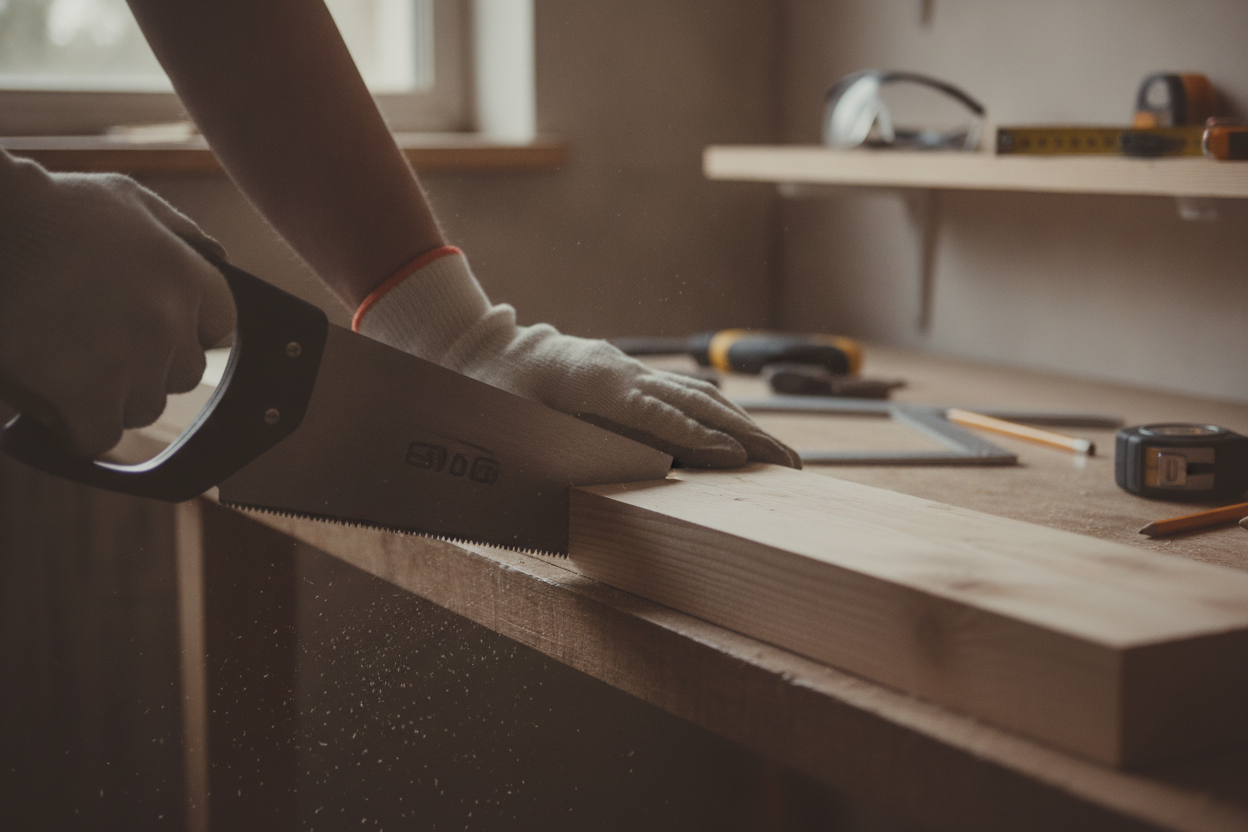
A hand saw is one of the most valuable tools in a home hobby shop because it works without power, setup, or noise. For beginners, though, it can be tricky to get straight cuts and smooth edges right away. I have found that the best results come from slowing down, marking carefully, and letting the saw do the work instead of forcing it.
Start by choosing a saw that matches the material you plan to cut. A fine-tooth option works well for smaller projects and cleaner finishes, while a coarser blade may be better for faster rough cuts. Before you begin, clamp the material securely and mark your line clearly. That simple step gives you a visual guide and reduces the chance of drifting off course.
Grip and angle matter too. A relaxed hold helps you stay controlled, and short starter strokes make it easier to set the blade exactly where you want it. Once the cut begins, use smooth, steady movements rather than pushing hard. If you rush, the saw can wander or splinter the edge. A little patience makes the cut look much more professional.
I like sharing tool advice like this because it helps readers get more value from their supplies and feel more confident in the shop. I’ll link the hand saw, clamps, and marking tools I use most often so you can compare options. Whether you build furniture, small crafts, or simple repairs, learning basic hand saw technique will improve almost every project you make.
Leave a Reply